Somewhere in your 40s, you may notice small changes. Getting up from a low chair takes a little more effort. A long walk through the market leaves your legs more tired than before. Morning stiffness takes a few extra minutes to ease.
Some changes in bones, muscles, and joints are a normal part of ageing, and they happen at different rates for different people. Losing mobility, however, should not simply be accepted as inevitable.
Regular movement, muscle strength, sensible nutrition, and timely medical attention all play a part in protecting bone and joint health after 40.
How Do Bones, Muscles, and Joints Change After 40?
Bone Density
Bone is living tissue that is constantly broken down and rebuilt. Bone mass generally peaks around the age of 30. After that, the balance slowly shifts, and in women, bone loss often speeds up for several years after menopause.
This gradual loss is not a disease in itself. When bones become thin and fragile enough to break easily, the condition is called osteoporosis.
Muscle Strength
Muscle mass and strength also tend to decline with age, especially in people who are not physically active. Strong muscles support and protect the joints, help with balance, and make everyday tasks like climbing stairs or carrying shopping easier.
Joint Cartilage and Flexibility
The smooth cartilage that covers the ends of bones can wear over time, and joints may feel stiffer or less flexible. In some people, these changes develop into osteoarthritis, a condition that affects the joint surfaces and commonly involves the knees, hips, and hands.
Osteoporosis and osteoarthritis are different conditions. Osteoporosis affects bone strength and fracture risk, often without any pain until a bone breaks. Osteoarthritis affects the joints and typically causes pain and stiffness with activity. You can read more about knee osteoarthritis as one common example.
Normal Ageing or Something More?
Mild stiffness that settles quickly after you start moving is common. Persistent pain, repeated swelling, or a steady loss of movement is not something to dismiss as “just age.” These may point to an underlying condition that deserves assessment.
Stay Physically Active to Support Bone and Joint Health
Regular physical activity is one of the most effective ways to maintain bone health in adults and protect long-term mobility. The World Health Organization recommends that adults aim for 150 to 300 minutes of moderate activity a week, along with muscle-strengthening activities on at least two days.
That may sound like a lot, but it can be built gradually into ordinary days.
Walking and Weight-Bearing Activity
Activities that make your body work against gravity, such as brisk walking, help maintain bone strength. A morning or evening walk around your neighbourhood, in a nearby park, or on the rooftop of your building all count. If your knees allow, taking the stairs for a floor or two is another simple option.
Strength Training
Strengthening exercises help maintain the muscles that support your joints. These do not require a gym. Rising from a chair without using your hands, wall push-ups, or light resistance bands can be a starting point, adjusted to your own ability.
Balance and Flexibility
Balance exercises become more important with age, because they help reduce the risk of falls. WHO advises adults over 65 to include activities that combine balance and strength on at least three days a week. Gentle stretching and mobility exercises help keep joints moving through their full range.
Start Gradually
Increase activity slowly rather than all at once. If you have heart disease, diabetes, a joint condition, or a previous injury, ask your doctor which types of exercise are suitable for you. There is no single routine that fits everyone.
Eat a Balanced Diet That Supports Bone Health
No single food guarantees strong bones. What matters is an overall balanced diet that provides enough calcium, vitamin D, protein, and other nutrients.
Calcium
The NHS advises that adults need about 700 mg of calcium a day, and that most people can get this from a varied diet. Familiar sources include:
- Milk, yoghurt (doi), and other dairy foods
- Small fish eaten whole with their bones, such as mola or kachki
- Leafy green vegetables
- Sesame seeds (til), lentils, and beans
Spinach (palong shak) contains calcium, but it also contains oxalate, which reduces how much the body absorbs, so it is not a reliable calcium source on its own.
Vitamin D
Vitamin D helps your body absorb calcium. Most of it is made in the skin through sunlight, and smaller amounts come from foods such as oily fish and egg yolks.
How much vitamin D a person makes varies widely. It depends on time spent outdoors, skin colour, clothing, and health conditions. Someone who spends most daylight hours in an office or indoors may make less than they expect.
If you are concerned about your vitamin D level, talk to your doctor before starting supplements. They can advise whether a blood test or supplement is appropriate. High-dose calcium or vitamin D should only be taken under medical guidance.
Protein
Protein helps maintain muscle mass, which supports both joints and balance. Fish, eggs, milk, dal, chickpeas, beans, and chicken are all good everyday sources.
Other Nutrients
Magnesium, vitamin K, and other nutrients also play a role in normal bone function. A plate that includes vegetables, fruit, whole grains, pulses, and protein is far more useful than focusing on any one “bone food.”
Maintain a Healthy Body Weight
The knees and hips carry your body weight with every step. Extra weight increases the load on these joints, especially during stairs, squatting, or getting up from the floor.
For people with knee osteoarthritis who are living with overweight, NICE guidance notes that weight loss can reduce pain and improve physical function.
Sustainable change works better than crash dieting. Small, consistent improvements in eating habits combined with regular activity are more realistic and easier to maintain.
Not everyone with joint discomfort needs to lose weight. Being significantly underweight is also a recognised risk factor for fragile bones.
Pay Attention to Posture and Everyday Movement Habits
Small daily habits can make movement more comfortable over time.
- Break up long sitting periods. If you work at a desk or run a shop, stand up and move for a few minutes every hour or so.
- Set up a comfortable workspace. A chair that supports your back, with your feet resting flat on the floor, can make long working hours easier.
- Choose supportive footwear. Shoes with good grip and cushioning are better for daily walking than worn-out sandals or slippers.
- Avoid sudden jumps in activity. Going from very little exercise to intense workouts, or a long day of heavy housework after weeks of rest, can strain joints and muscles.
- Lift safely. When carrying shopping bags, gas cylinders, or water containers, bend at the knees, keep the load close to your body, and avoid twisting.
Protect Your Bones and Reduce the Risk of Falls
Falls become more significant with age, especially for people with reduced balance or weakened bones. A fall that might cause only a bruise at 30 can lead to a fracture of the hip, wrist, or spine in someone with osteoporosis.
A few practical steps help at home:
- Keep walkways clear of clutter, loose wires, and rugs that slide
- Make sure stairs and corridors are well lit, and keep a rechargeable light handy for power cuts
- Take extra care on wet bathroom floors and slippery surfaces, particularly during the monsoon
- Use handrails on stairs where available
- Wear footwear with good grip, both indoors and outside
Keeping your leg muscles strong and practising balance exercises also lowers fall risk. If you have repeated falls, frequent dizziness, or feel unsteady when walking, get a medical assessment rather than waiting.
Lifestyle Habits That May Negatively Affect Bone Health
Some habits can work against healthy bones:
- Smoking is linked with lower bone density and higher fracture risk.
- Heavy alcohol use is a recognised risk factor for fragile bones.
- Physical inactivity leads to loss of both bone and muscle strength.
- Poor nutrition, including too little calcium or protein, can affect bone and muscle health.
- Poor sleep and inadequate recovery can affect energy, activity levels, and muscle repair.
- Unsupervised medicine use can cause harm. Long-term steroid tablets, in particular, can weaken bones, so they should only be taken under a doctor’s supervision. The same caution applies to supplements taken without advice.
When Should You Seek Medical Advice?
Persistent or worsening symptoms should not simply be blamed on ageing. Consider a professional orthopedic assessment if you have:
- Joint pain that lasts for weeks or keeps returning
- Repeated swelling in a joint
- Morning stiffness that lasts a long time or interferes with daily activities
- Increasing difficulty walking or climbing stairs
- Reduced movement in a joint
- Repeated falls or a fracture after a minor fall
- Sudden severe pain following an injury
Long-lasting morning stiffness with swelling in several joints can sometimes suggest an inflammatory condition such as rheumatoid arthritis. These symptoms can have many causes, and only a proper clinical assessment can identify which one applies to you.
Urgent Warning Signs
Seek emergency care promptly for a hot, swollen, painful joint with fever, or for a significant injury with visible deformity or inability to bear weight.
Do Adults Over 40 Need Bone Health Screening?
Not automatically. Bone density testing is not routinely needed for every adult just because they have turned 40.
Whether an assessment is useful depends on your individual risk. Factors doctors consider include:
- Age and sex
- Menopause, particularly early menopause
- A previous fracture from a minor fall
- A family history of hip fracture
- Long-term use of steroid tablets or certain other medicines
- Medical conditions that affect bone health
- Low body weight, smoking, or heavy alcohol use
UK guidance from NICE, for example, suggests considering fracture risk assessment in all women aged 65 and over and men aged 75 and over, and in younger adults when specific risk factors are present.
If your doctor feels it is appropriate, they may recommend a bone density scan, known as a DXA scan, to measure bone strength.
Final Thoughts
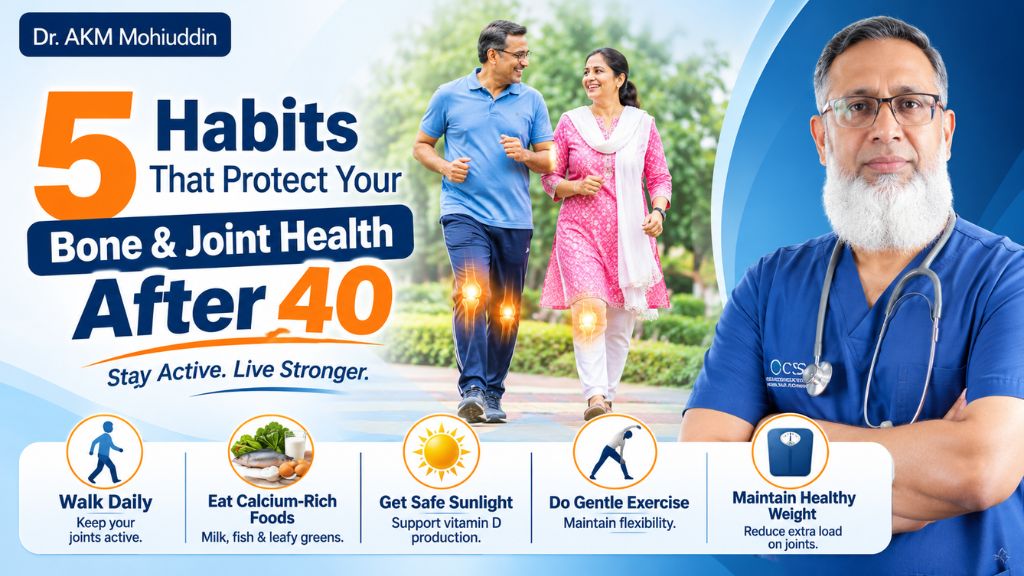
Bone and joint health after 40 is built through steady, everyday habits: staying active, eating a balanced diet, managing weight sensibly, preventing falls, and paying attention to symptoms. Healthy ageing is not about avoiding every physical change. It is about staying strong, mobile, and independent for as long as possible. If you have concerns about your bones or joints, you can learn more about orthopedic care or arrange a consultation by calling the hotline at 09653667777.